Understand what stump grinding removes
A grinder works below the surrounding surface to a depth agreed in the quote. It does not usually excavate the entire root system. Larger roots remain underground and decay gradually, which is normally less disruptive than pulling them from established gardens and services.
Grinding depth should match the intended use. Shallow treatment may suit mulch cover, while lawn, paving or construction can require different preparation. Tell the contractor your plan before work begins.
Managing the pile of grindings
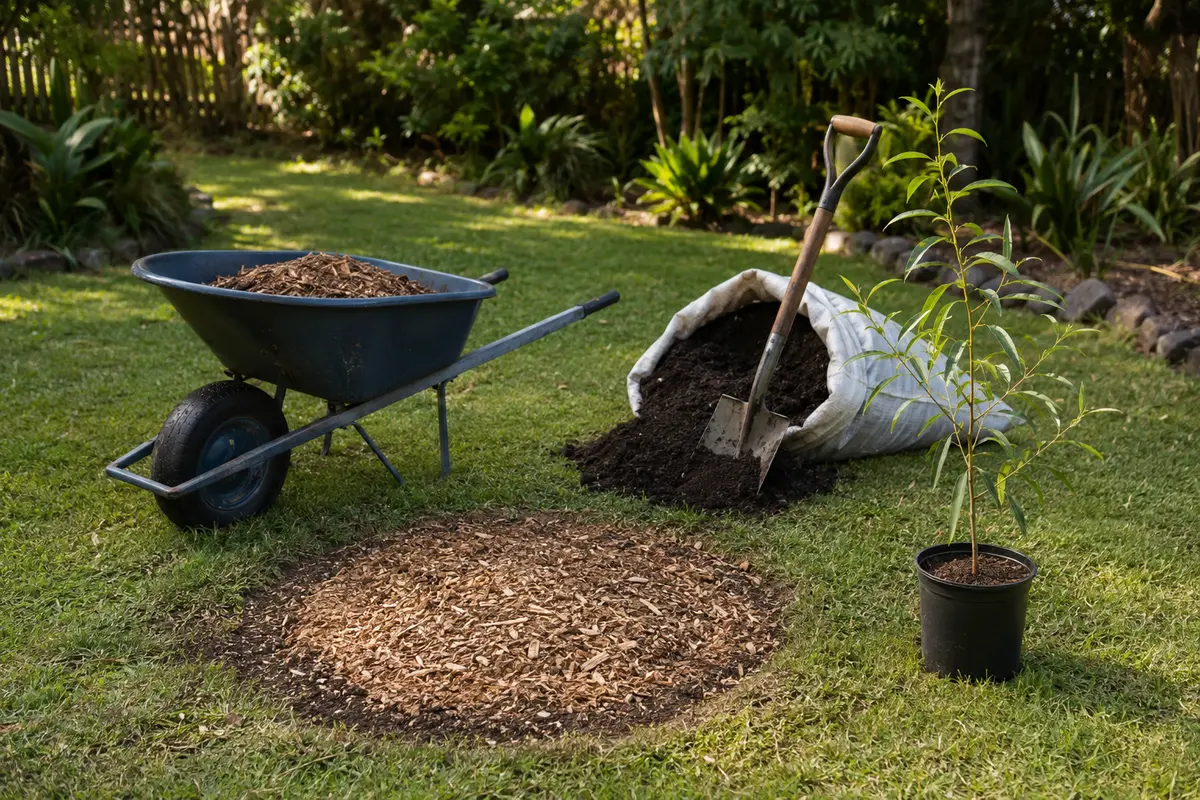
Fresh grindings contain wood chips mixed with soil. They can be useful as surface mulch after larger pieces are separated, but should not be packed deeply into a planting hole as though they were topsoil. As wood decomposes it loses volume and can temporarily affect nutrient availability where mixed through soil.
Remove excess material, leave the site slightly proud if settlement is expected, and add appropriate clean soil for the intended finish. Keep mulch away from direct contact with the trunks of retained plants.
Preparing for lawn or garden
For lawn, clear loose woody material, add suitable topsoil and compact lightly enough to reduce settlement without creating an airless layer. Grade the surface so water drains away from buildings, then seed or turf according to seasonal conditions.
For a garden bed, blend the restored area into the wider bed and choose plants that suit light, drainage and competition from remaining roots. Monitor for subsidence and top up rather than overfilling on day one.
Can another tree go in the same place?
Planting directly over the former trunk can be difficult because roots and woody material remain. The new tree may sit in unstable, low-nutrient fill and encounter the old root plate. Where space allows, offset the new planting into undisturbed soil.
Choose the location and species by mature size, not pot size. Consider overhead wires, building clearance, drainage, access and future root space. A small move now can avoid decades of conflict.
Practical checklist
✓ Agree on grinding depth before the job✓ Remove excess woody material for lawn areas✓ Expect some settlement as roots decay✓ Use clean soil appropriate to the final surface✓ Offset replacement trees into suitable groundWatch the site over time
Old roots can produce mushrooms as they decay, and some species may send up shoots from remaining roots. Fungal fruiting in the old stump zone is not the same as a diagnosis of disease in nearby healthy trees, but unusual or persistent changes can be assessed.
Check levels after heavy rain and again over the following months. Correcting a small depression early helps prevent ponding, mower damage and trip hazards.
KEEP EXPLORING
Advice connected to local help
COMMON QUESTIONS
Questions about this topic
How deep should a stump be ground?+
It depends on the intended finish, root flare and machine access. Agree on a measurable depth or outcome in the quote rather than assuming one standard.
Can I use all the grindings as mulch?+
Some may be reused as surface mulch, but large volumes mixed with soil are not an ideal direct replacement for topsoil. Keep woody mulch clear of plant trunks.
Will grinding stop every shoot?+
Not always. Some species can resprout from roots beyond the ground area. Ask about the likely behaviour of the particular tree.
TALK ABOUT YOUR TREE
Get advice for the actual site
Share the suburb, tree, access and what has changed so the next step can be assessed properly.
Contact us →